
On this page
- How color-by-number pages change your choice of coloring supplies
- Crayons for color-by-number pages
- Colored pencils for detailed coloring pages
- Markers for coloring pages: washable, fine-tip and bleed-through
- Matching your supplies to the color key
- Choosing paper for printing coloring pages
- Safety labels to look for on coloring supplies
- Putting together a simple coloring kit at home
- Which supply for which Outlineify page?
- Coloring supplies for color-by-number pages
Short answer: Use crayons or chunky washable markers for color-by-number pages with big, simple shapes, and colored pencils or fine-tip markers for detailed pages with many small numbered areas. Regular printer paper works well for crayons and colored pencils; with markers, put a scrap sheet underneath in case the ink soaks through.
You printed a color-by-number page, the color key is ready and everyone is at the table. Then the question comes: crayons, markers or colored pencils? The right coloring supplies depend less on age and more on the page in front of you: how big the areas are, how many colors the key has and what paper you printed on. This guide compares the three most common supplies and helps you put together a simple coloring kit for home.
How color-by-number pages change your choice of coloring supplies
A color-by-number page splits a drawing into numbered areas, and a color key shows which color belongs to each number. Two things matter for your supplies:
- The size of the areas. A page with big, simple shapes has wide areas that are easy to fill with a crayon. A detailed page has narrow areas between lines, where a sharp point helps.
- The number of colors in the key. A simple page may use only two to four colors. A detailed page may use eight colors or more, so you need a set with enough shades to match the key.
Outlineify makes pages at two detail levels. 0–2 gives big, simple shapes with fewer areas and thick lines. 2+ gives more areas and numbers, with more of the photo’s details kept in. The two levels need slightly different tools.
 The photo
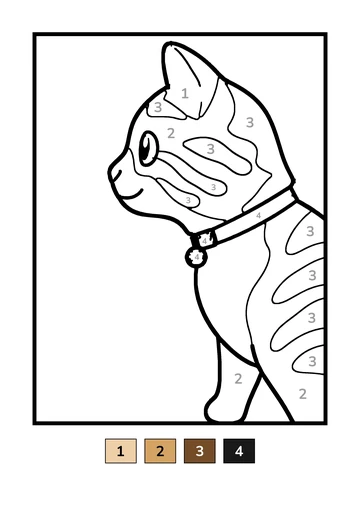 The page to print
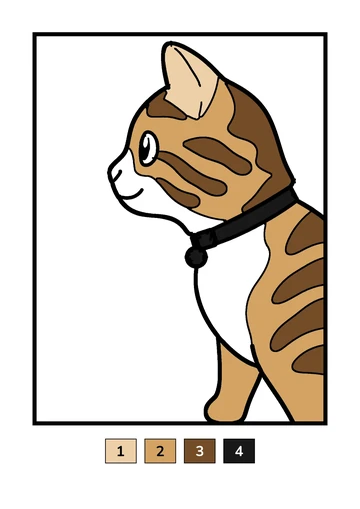 The colored example
Crayons for color-by-number pages
Crayons are the classic coloring supply for good reasons:
- They do not bleed through paper, so they work on any printer paper.
- They are sturdy. Thick and triangular crayons are easy to hold and hard to break.
- They are easy to layer. Light pressure gives a soft color; more pressure gives a strong one.
Crayons are less precise. In small areas they tend to cross the lines, and their wax can make dark colors look patchy on smooth paper. They are the best match for 0–2 pages, for large background areas on any page and for younger colorers who press hard.
Colored pencils for detailed coloring pages
Colored pencils are the most precise of the three. A sharp point fits into narrow areas between lines, so they suit 2+ pages with many numbers, fur, leaves and small background details.
- They give you control. Light strokes build up color slowly, so it is easy to stay inside an area.
- They blend. Two colors on top of each other make a third, which helps when your set does not have the exact shade from the color key.
- They need sharpening. Keep a sharpener in the coloring box, and expect soft-core pencils to wear down faster than hard ones.
Covering a large area with a colored pencil takes time. A good approach is to use colored pencils for the details and a crayon for the biggest areas of the same color.
Markers for coloring pages: washable, fine-tip and bleed-through
Markers give the strongest, brightest colors and cover an area quickly. On printer paper, though, they need a little care:
- Bleeding. Standard printer paper is thin. Wet ink can soak through and mark the table or the next page, so put a scrap sheet underneath.
- Streaks. Coloring back and forth over the same spot while the ink is wet can make the paper rough. Color in one direction and let the ink dry.
- Washable markers are easier to clean from hands and tables, which helps when the youngest join in.
- Fine-tip markers suit small areas on detailed pages; chunky markers suit big shapes.
If you love markers, printing on heavier paper helps. Check your printer’s manual for the paper weights it can handle before you try.
Matching your supplies to the color key
The color key on an Outlineify page is built from the colors in your photo, so it often includes shades that a basic set does not have, such as the soft orange of a ginger cat or the grey of a stone wall. You do not need a perfect match:
- Lay your supplies next to the key and pick the closest color for each number.
- Test on a scrap strip. A short line of each color on spare paper shows how it looks on your printer paper.
- Look at the colored example. It shows which areas belong together, so similar shades still give a page that looks right. The pages in the gallery on our home page show how close shades still give a finished look.
- Mix with pencils. Layer two colored pencils to get closer to a shade in the key.
 The photo
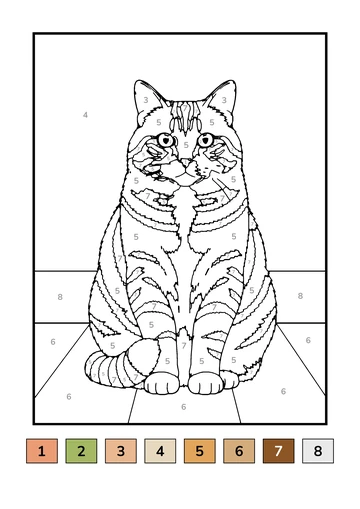 The page to print
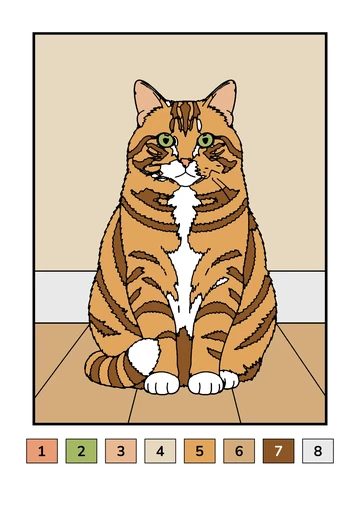 The colored example
Choosing paper for printing coloring pages
Outlineify pages fit A4 and US Letter. Regular printer paper is fine for crayons and colored pencils and is the easiest to find. For markers, heavier paper holds the ink better, if your printer can feed it.
Print single-sided, so coloring one page never shows through on another. For printer settings and black-and-white printing, see our guide on how to print coloring pages at home.
Safety labels to look for on coloring supplies
Read the age recommendation on every package, especially for small parts such as caps. Many art supplies also carry a safety label. In the United States, the AP seal of the Art & Creative Materials Institute is a common one, and the institute explains on its website what its certification covers. Store markers with their caps on, so they do not dry out and the caps stay away from little hands.
Putting together a simple coloring kit at home
A small box keeps everything ready for the next coloring session:
- crayons for big shapes and backgrounds,
- colored pencils and a sharpener for details,
- a few washable markers for bright accents,
- scrap paper to test colors and to put under marker pages,
- a folder with printed pages and their colored examples.
With the kit on a shelf, starting is easy. Our post on coloring together as a family routine has ideas for turning that box into a regular, calm family moment.
Which supply for which Outlineify page?
To sum up:
- 0–2 pages, big shapes: crayons or chunky washable markers.
- 2+ pages, many small areas: colored pencils or fine-tip markers, with crayons for large backgrounds.
- Pages you want to frame: colored pencils for control, with markers for bright details on heavier paper.
Whatever you choose, the numbers do the guiding. And if you are still looking for the right first page, a photo of the family pet is a good start: see how to turn your pet’s photo into a coloring page.
Coloring supplies for color-by-number pages
What are the best coloring supplies for color-by-number pages?
Match the supplies to the page. Crayons and chunky washable markers suit big, simple shapes, while colored pencils and fine-tip markers suit detailed pages with many small numbered areas. A home kit with all three covers every page.
Do markers bleed through printer paper?
They can. Standard printer paper is thin, and markers with wet ink may soak through or show on the back. Put a scrap sheet under the page and choose washable or fine-tip markers for small areas.
What if my crayons do not match the colors in the color key?
Pick the closest color you have. The numbers and the colored example show which areas belong together, so the page still looks right with similar shades. You can also test your colors on a scrap strip next to the key.
Which paper should I print coloring pages on?
Regular A4 or US Letter printer paper works for crayons and colored pencils. If your printer supports heavier paper, it holds marker ink better. Check your printer's manual for the paper weights it can feed.
How do I know if art supplies are safe for young children?
Read the age recommendation on the package and look for safety labels such as the AP seal of the Art & Creative Materials Institute, which explains its certification on its own website.