
On this page
- Why garden flower photos make beautiful coloring pages
- How to photograph flowers for a coloring page
- The best flowers for simple coloring pages
- Choosing the detail level for flower coloring pages
- Make a flower coloring page in Outlineify
- Seasonal ideas for flower coloring pages
- Printing and coloring tips for flower pages
- Bring the garden to the coloring table
- Flower coloring page questions
Short answer: Photograph one flower or one vase at a time in soft daylight against a plain background, crop close, and turn the photo into a color-by-number page with Outlineify. Flowers with a few big petals, like tulips and daisies, make the clearest spring coloring pages, and the color key comes straight from your garden.
When the tulips open and the first daisies appear, your camera roll fills with flower photos. Those photos can become something more than pictures: printable spring coloring pages made from the flowers in your own garden, on your balcony or on the kitchen table. This guide explains how to photograph flowers for a coloring page, which flowers turn into the clearest pages, and how to collect a season of them.
Why garden flower photos make beautiful coloring pages
Flowers are made of shapes that are a pleasure to color: petals, leaves, stems and a vase. A flower coloring page made from your own photo also carries the real colors of your garden. In an Outlineify page, the color key is built from the colors in the photo, so a pink tulip gets its own pink and the vase keeps its own white.
Flower pages work for everyone at the table. A single tulip with two big areas suits the youngest; a vase full of roses with many petals keeps an adult busy for a long time.
How to photograph flowers for a coloring page
A clear photo gives a clear page. A few habits make the biggest difference:
- One flower or one vase at a time. A single bloom or a single vase becomes a calm page. A whole flower bed becomes a page with many small areas.
- A plain background. A painted wall, a wooden fence, a tabletop or a clear sky behind the flower keeps the page clean. Busy leaves and other plants behind the flower turn into extra areas.
- Soft daylight. An overcast day or the shade of a house gives soft light. Bright midday sun creates hard shadows on petals.
- Get close. The flower should fill most of the frame. You can crop in the app, but starting close helps.
- Bring it inside. A cut flower in a vase on a table by the window is often easier to photograph than the same flower outside in the wind.
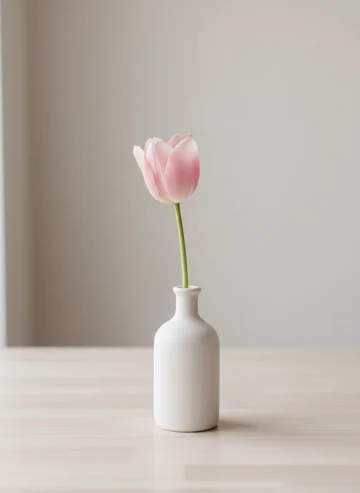 The photo
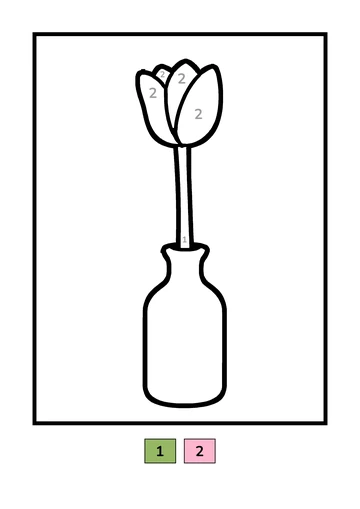 The page to print
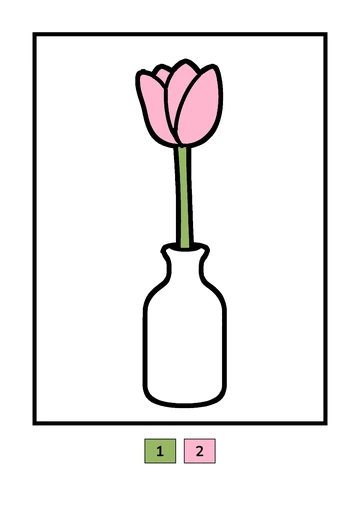 The colored example
The best flowers for simple coloring pages
Some flowers turn into pages more easily than others:
- Tulips have a few large petals and a simple stem, so they make some of the clearest pages.
- Daisies and sunflowers have petals arranged around a round center, which turns into a satisfying pattern of areas.
- Poppies and roses work well close up, one bloom at a time.
- Flowers in a vase add a second big shape and a background, which suits the more detailed level.
Clustered flowers such as lilac, hydrangea or small wildflowers have many tiny parts. They can still become pages, but expect more, smaller areas, or crop to a single cluster.
Choosing the detail level for flower coloring pages
Outlineify makes pages at two levels, and you choose for each photo:
- 0–2: Big, simple shapes. Fewer areas and thick lines that are easy to stay inside. The tulip above becomes a few large shapes with a two-color key.
- 2+: More to color. More areas and numbers, with more of the photo’s details kept in: veins in the leaves, folds in the petals, the pattern of the vase.

You can make one page at each level from the same flower photo. Our guide to color-by-number pages for toddlers and young children explains the two levels in more detail.
Make a flower coloring page in Outlineify
- Open Outlineify on your iPhone or iPad and take a photo of the flower, or choose one from your library.
- Drag the corners of the frame close around the flower or the vase.
- Choose 0–2 or 2+.
- Wait about a minute while Outlineify draws the outlines, numbers every area and builds the color key from your photo’s colors. You can leave the app; a notification tells you when the page is ready.
- Print the page on A4 or US Letter, save it as a PDF or an image, or share it.
Seasonal ideas for flower coloring pages
Flower pages fit naturally into the rhythm of the year:
- A garden diary. Photograph whatever is blooming each week and make a page from it. By summer, you have a coloring record of the whole spring.
- A spring coloring book. Bind the season’s flower pages into a book with a cover page of the first tulip. Our post on making a family coloring book from your own photos explains how.
- The grandparents’ garden. Ask grandparents to send photos of their flowers, make pages from them and send the colored pages back.
- A window gallery. Hang the colored flower pages in a window facing the street for the spring.
Printing and coloring tips for flower pages
Print your flower pages on regular A4 or US Letter paper. When you print, you can add the colored example on a second sheet, which helps when petals have similar shades. For printer settings and black-and-white printing, see our guide on how to print coloring pages at home.
Colored pencils are especially good for flowers: light strokes and layering give the soft color changes of real petals. Crayons and chunky markers are great for big 0–2 flower shapes. Our comparison of crayons, markers and colored pencils has more detail.
Bring the garden to the coloring table
Flower coloring pages are a gentle way to share the garden with everyone in the family, including those who were not there when the tulips opened. Put the real flower in a glass on the table, lay the page next to it and color together. Our post on coloring together as a family routine has more ideas for regular family coloring time.
Your photo is used only to make your page and is deleted from our servers as soon as the page is done. The finished page stays in My Drawings, ready to print again next spring.
Flower coloring page questions
Which flowers make the best coloring pages?
Flowers with a few big petals and a clear outline, such as tulips, daisies, sunflowers, poppies and roses in a vase, give the cleanest pages. Tiny clustered blooms and busy flower beds turn into pages with many small areas.
How should I photograph a flower for a coloring page?
Photograph one bloom or one vase at a time, in soft daylight, against a plain background such as a wall, a fence or a tabletop. Get close so the flower fills most of the frame.
Can I make a flower coloring page with only a few colors?
Yes. The 0–2 level in Outlineify makes big, simple shapes with only a handful of colors. The tulip page shown in this post uses a two-color key.
What supplies work best for flower coloring pages?
Colored pencils are good for petals and leaves, because light strokes and layering give soft color changes. Crayons and chunky markers suit big, simple flower shapes.
Can I make a whole spring coloring book from garden photos?
Yes. Photograph a different flower every week, make a page from each photo, print them on the same paper size and bind them with staples, ribbon or a ring binder.